

A Movement to Support Healthy Aging



There’s a good chance that many of your older clients have never considered joining a commercial exercise facility like a health club or YMCA. However, recent studies have shown that memberships at fitness facilities support the lifelong activity that preserves muscle strength as individuals age. As every medical and therapeutic expert knows, little is more important when it comes to empowering older individuals to keep doing the things they love.
An Active Intent
In a 2022 study out of Denmark, 41% of those surveyed said they “never” or “seldom” exercised, and only 11% exercised regularly. Of those who were currently inactive, most said they wanted to be more physically active. This is where commercial fitness facilities come in, helping individuals close the gap between intentions and actions. Fitness facilities offer a wide variety of options to satisfy different preferences. They also eliminate excuses not to exercise due to inclement weather. Ultimately, by helping older individuals stay active and social, the research suggested that health clubs offer “the best opportunities for a healthy lifestyle.”
Maintaining Muscle Mass Matters
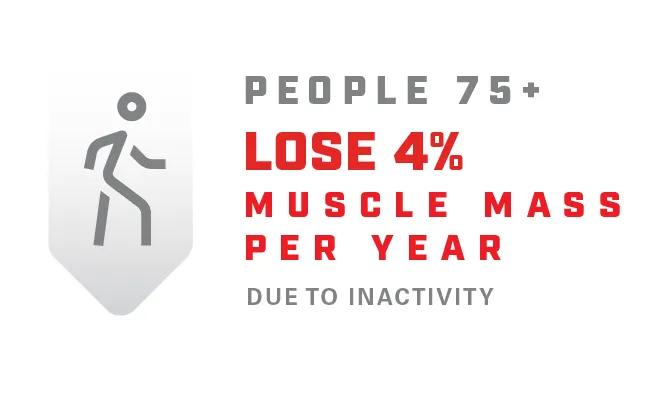
Muscle loss is often unnoticeable during mid-life but accelerates in older adults. Until age 45, the average adult loses about 0.4% of their muscle mass annually. By age 75, however, that loss is almost 10-fold higher, with the elderly losing 4% of their muscle mass with each passing year. Although it is tempting to blame the accelerated losses on age, it is mostly a reflection of being less active. Without enough activity, older individuals lose the connections within the spinal cord that help execute movement. Both inactivity and age are also associated with a loss of connections between nerves and muscle cells. As these connections between the nervous system and muscles are eliminated, muscle cells shrink, weakening the body. Yet despite the fact that aging is inevitable, losing muscle function is not. Muscles that are regularly used and challenged retain their ability to regenerate, even in advanced age.
Activating Satellite Cells
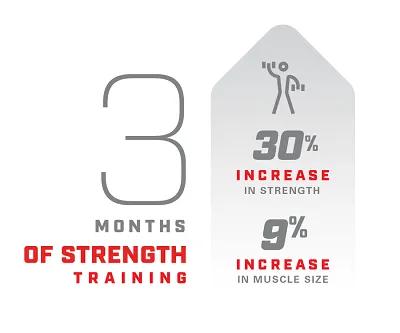
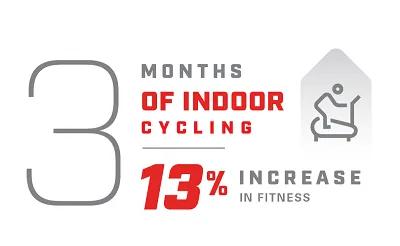
Whether a fitness facility visit involves strength training or cardiovascular exercise, challenges to muscles activate special stem cells. These stem cells divide to create satellite cells that help muscles adapt and grow. By activating satellite cells, regular exercise maintains muscle regeneration capacity and improves muscle function. Studies have shown that only three months of strength training for those 70 and older increased their number of satellite cells, bolstering their strength by up to 30% and enhancing their muscle size by up to 9%. Additionally, three months of endurance training using an indoor cycle for the same age group was sufficient to increase their number of satellite cells and improve their overall fitness by around 13%.
Active Encouragement
To support healthy aging in your older clients, be sure to encourage them to lead an active lifestyle. Though this doesn’t necessarily have to involve a membership at a commercial fitness facility, such a membership can motivate them to get active and stay active, no matter what the weather outside or the time of day. With all that today’s fitness facilities offer — both in terms of training variety and social support — they can be an invaluable tool when it comes to keeping older adults strong, healthy and able to do the things they love.

Karlie Intlekofer, PhD, CNC, CPT
References
Castro et al. Aging alters mechanisms underlying voluntary movements in spinal motor neurons of mice, primates, and humans. JCI Insight 2023; 3(9): e169448. https://doi.org/10.1172/jci.insight.168448
Charifi et al. Effects of endurance training on satellite cell frequency in skeletal muscle of old men. Muscle Nerve 2003; 28(1): 87-92. https://doi.org/10.1002/mus.10394
Gonzalez-Freire et al. The neuromuscular junction: Aging at the crossroad between nerves and muscle. Front Aging Neurosci 2014; 11(6): 1-11. https://doi.org/10.3389/fnagi.2014.00208
Mitchell et al. Sarcopenia, dynapenia, and the impact of advancing age on human skeletal muscle size and strength; a quantitative review. Frontiers in Physiology 2012; 3. https://doi.org/10.3389/fphys.2012.00260
Soendenbroe et al. Preserved stem cell content and innervation profile of elderly human skeletal muscle with lifelong recreational exercise. J Physiol 2022; 600(8): 1969-89.
https://doi.org/10.1113/JP282677
Rasmussen et al. An explorative evaluation study of the mechanisms underlying a community-based fitness centre in Denmark – Why do residents participate and keep up the healthy activities? Health and Social Care 2018; 26(6): 898-907. https://doi.org/10.1111/hsc.12614
Shephard & Aoyagi. Seasonal variations in physical activity and implications for human health. European Journal of Applied Physiology 2009; 107: 251-71. https://doi.org/10.1007/s00421-009-1127-1
Verdijk et al. Skeletal muscle hypertrophy following resistance training is accompanied by a fiber type-specific increase in satellite cell content in elderly men. J Gerontol A Biol Sci Med Sci 2009; 64: 332–9. https://doi.org/10.1093/gerona/gln050
Percentages retrieved from: https://www.euronews.com/next/2023/03/05/exercise-in-europe-which-countries-do-the-most-and-least-physical-activity
